
First attempt: all tickets gone
After breakfast at the hotel, it was time for what I had been looking forward to for a long time: not visiting just another modern knife showroom, but going to one very special little shop. Arriving at Hayakawa Hamonoten, which I had researched back home: surprise, surprise. Not only was the expected line already stretched down the alley — all coveted queue tickets for the day were already completely gone.
Chatting in line, a German girl brought me up to speed. She had come on Sunday to no avail — of course, it was chiuso. Today she had been queuing since seven AM to snag daily queue ticket No. 4 out of a maximum of 25 and quickly snap a photo of the display. That way, she could choose her preferred knife well before her actual slot.
6:53 AM in the Alley
The next morning, I set off with a brisk step through the almost empty streets at 6:37 AM. Turning into the alley at 6:53 AM, I could already see a line forming in front of the shop from about 250 meters away.
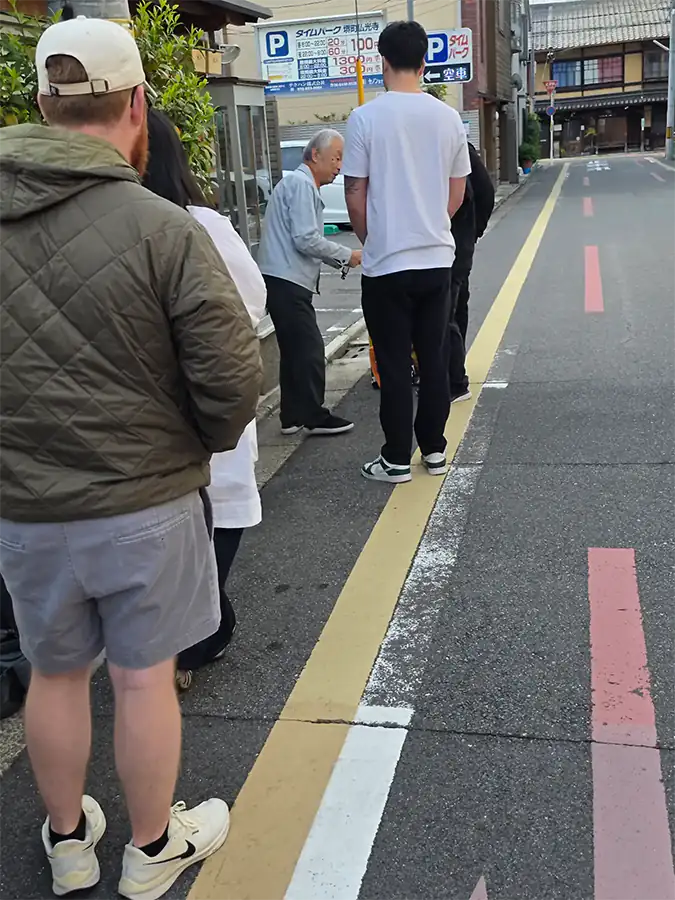
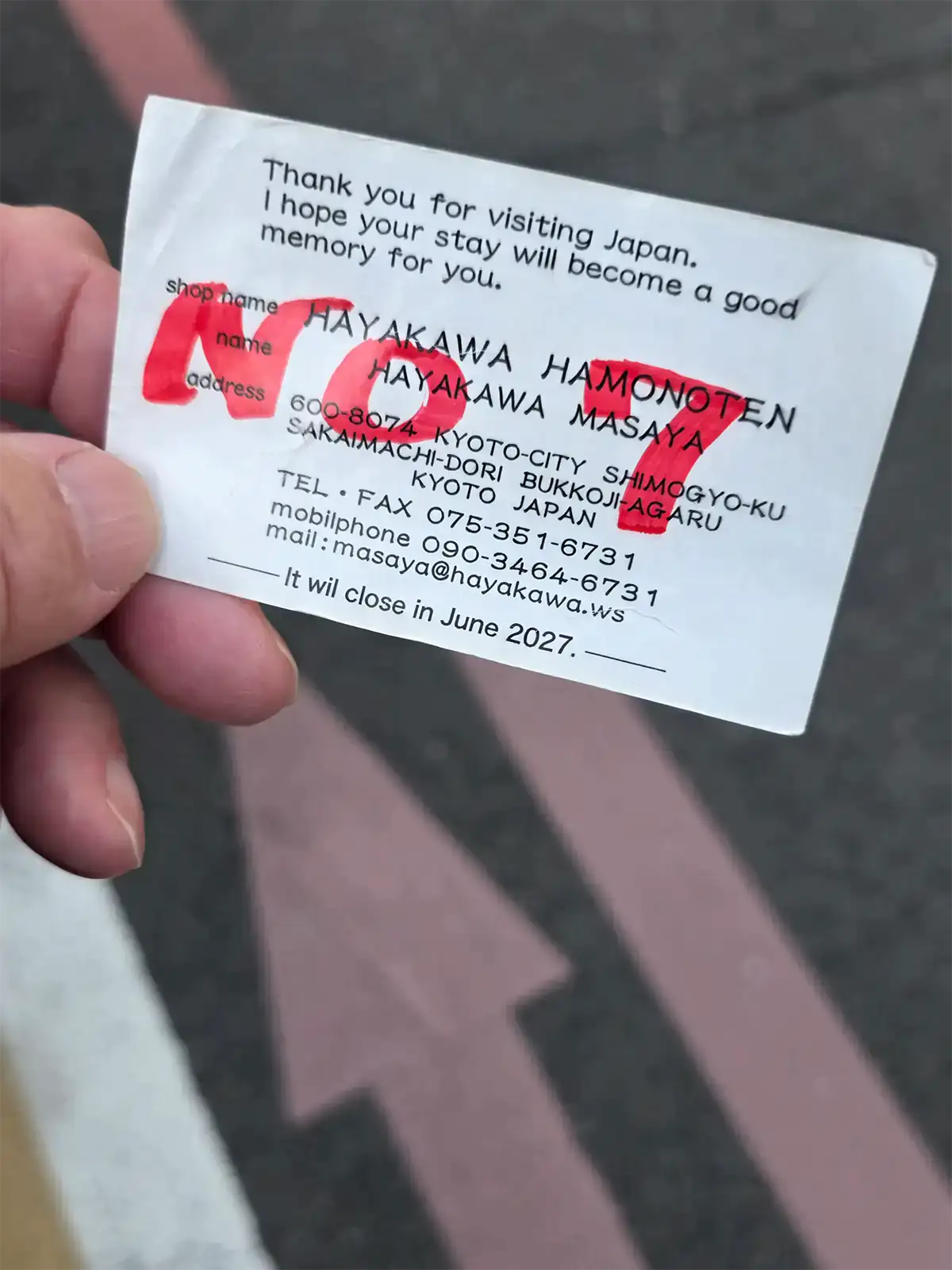
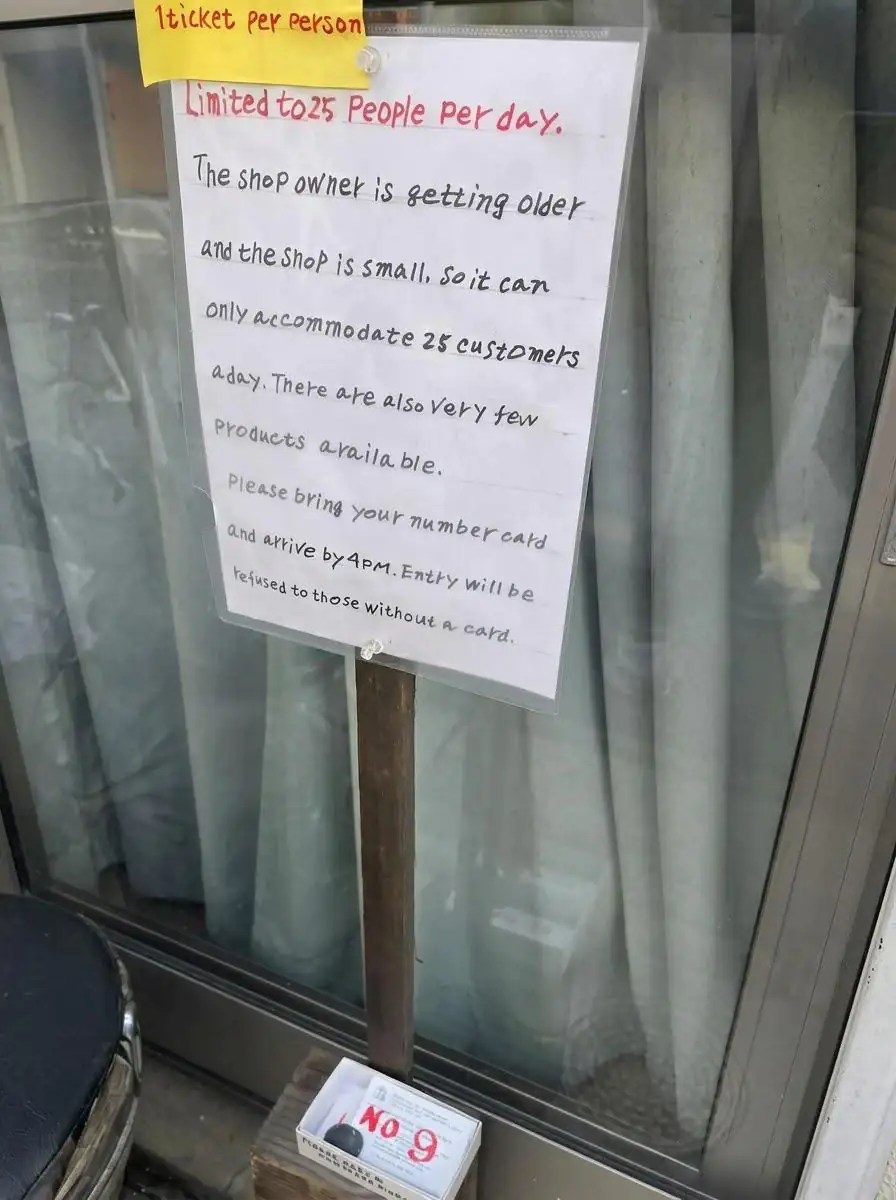
Status at visit: Spring 2026. The notice and queue tickets on this page document our visit. Opening hours, ticket practices, and availability may change — please verify current details prior to your visit.
Although the shop was officially scheduled to open at nine o'clock, the master invited the first three people in at 8:40 AM already. I took the opportunity to snap quick photos of the display and talked shop with the others about which set made the most sense. Then the master vanished into the building across the alley, leaving us briefly alone in the shop — a situation that certainly caught us visitors by surprise.
I headed back to the hotel to have breakfast with Barbara. By 9:30 AM, we were back together. Perfect timing: at that exact moment, the very last ticket of the day was being handed out. An in-depth conversation with a few repeat customers outside prompt expanded our wishlist once again.
Three Knives in the Final Selection
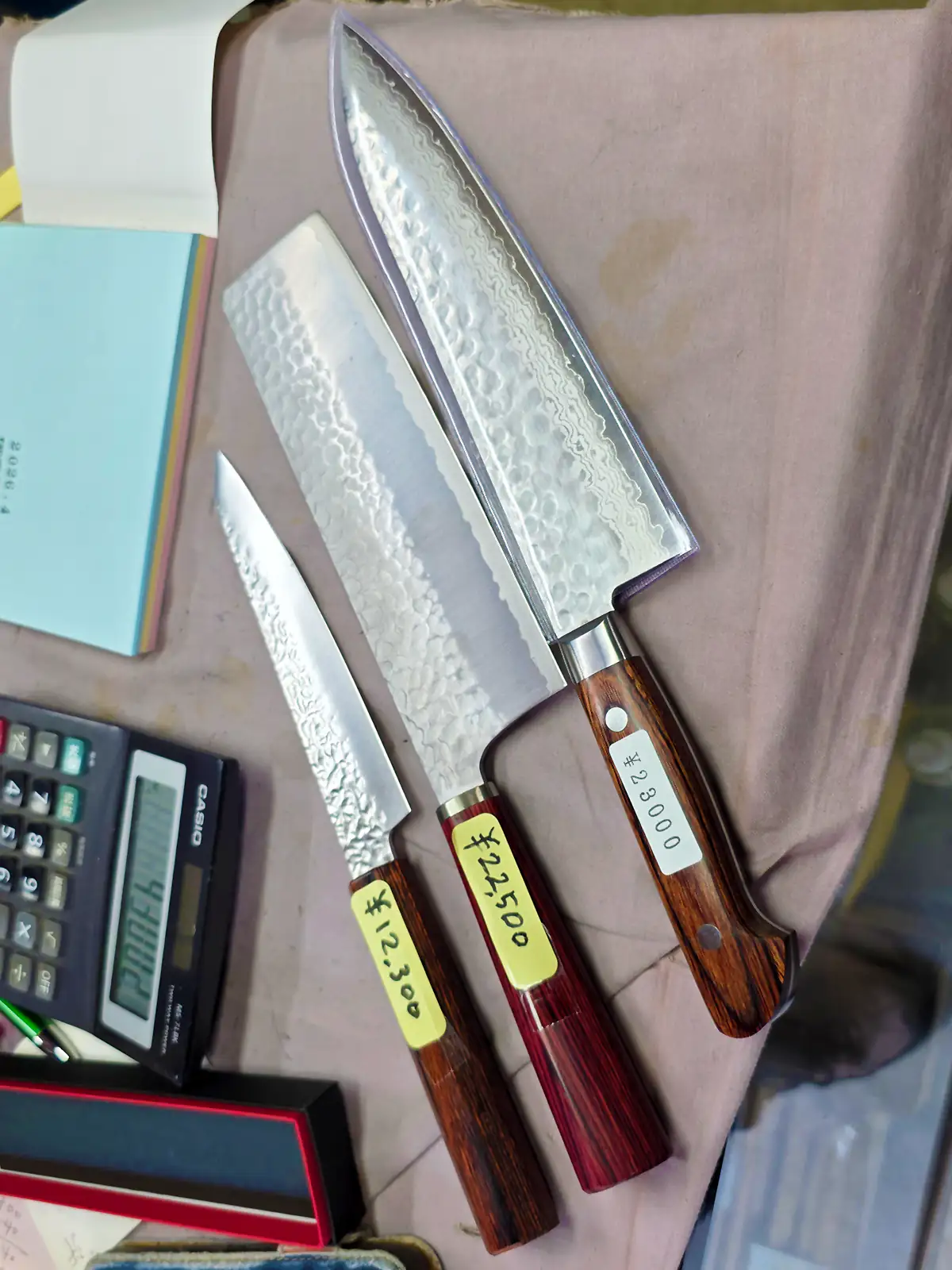
Inside, the final decision was made. Not the largest set, not the quickest option — but three knives that made sense for us: a Gyuto, a Nakiri, and a Petty. Each had its own shape, its own handle, and its own subtle reason for making it into the final selection.
The real highlight, however, was yet to come.
- Gyuto
- The versatile chef's knife for everyday use.
- Nakiri
- The vegetable knife with a wide, flat blade.
- Petty
- The small utility knife for delicate work.
Two Engravings, One "Too hard"
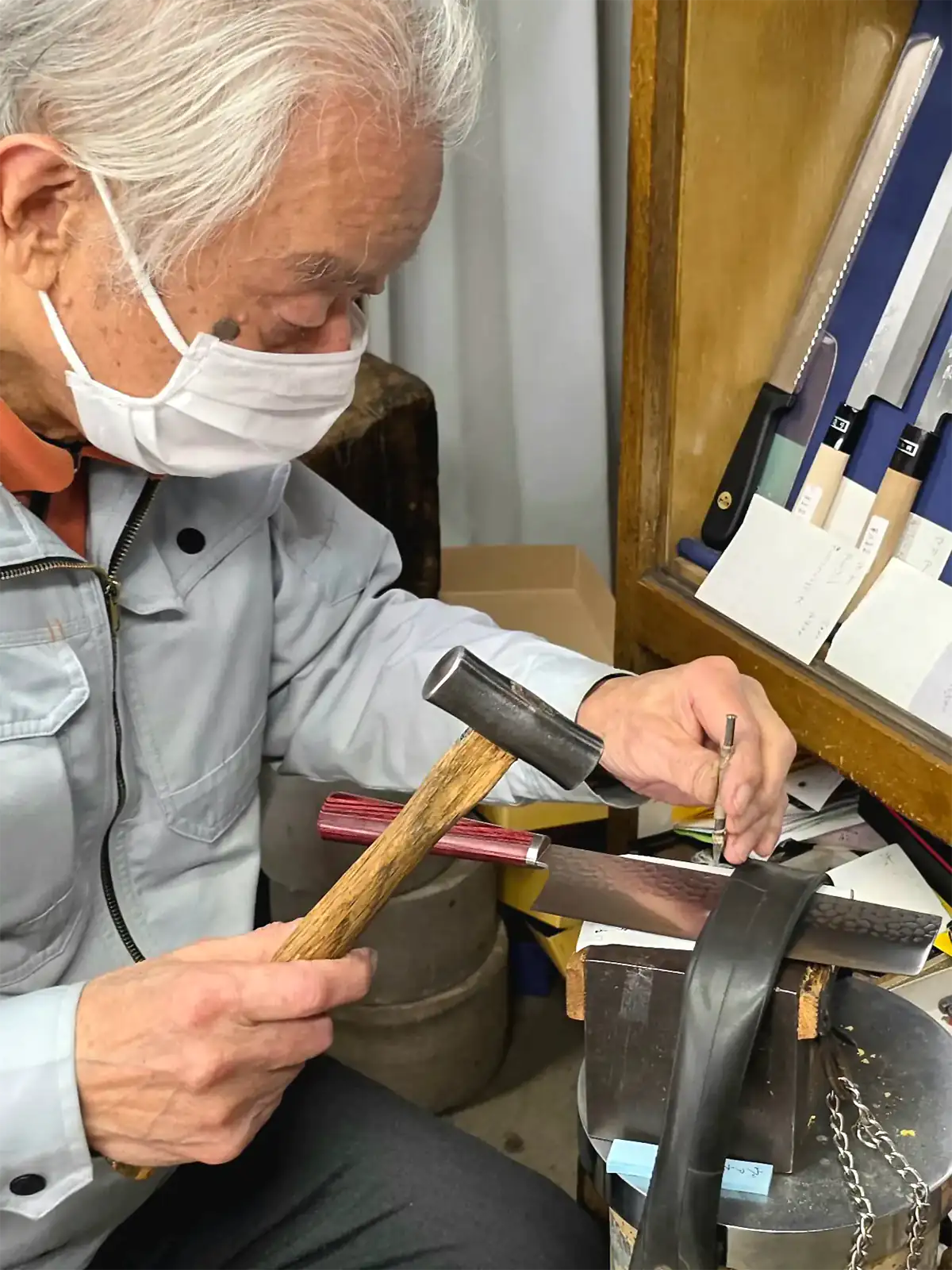
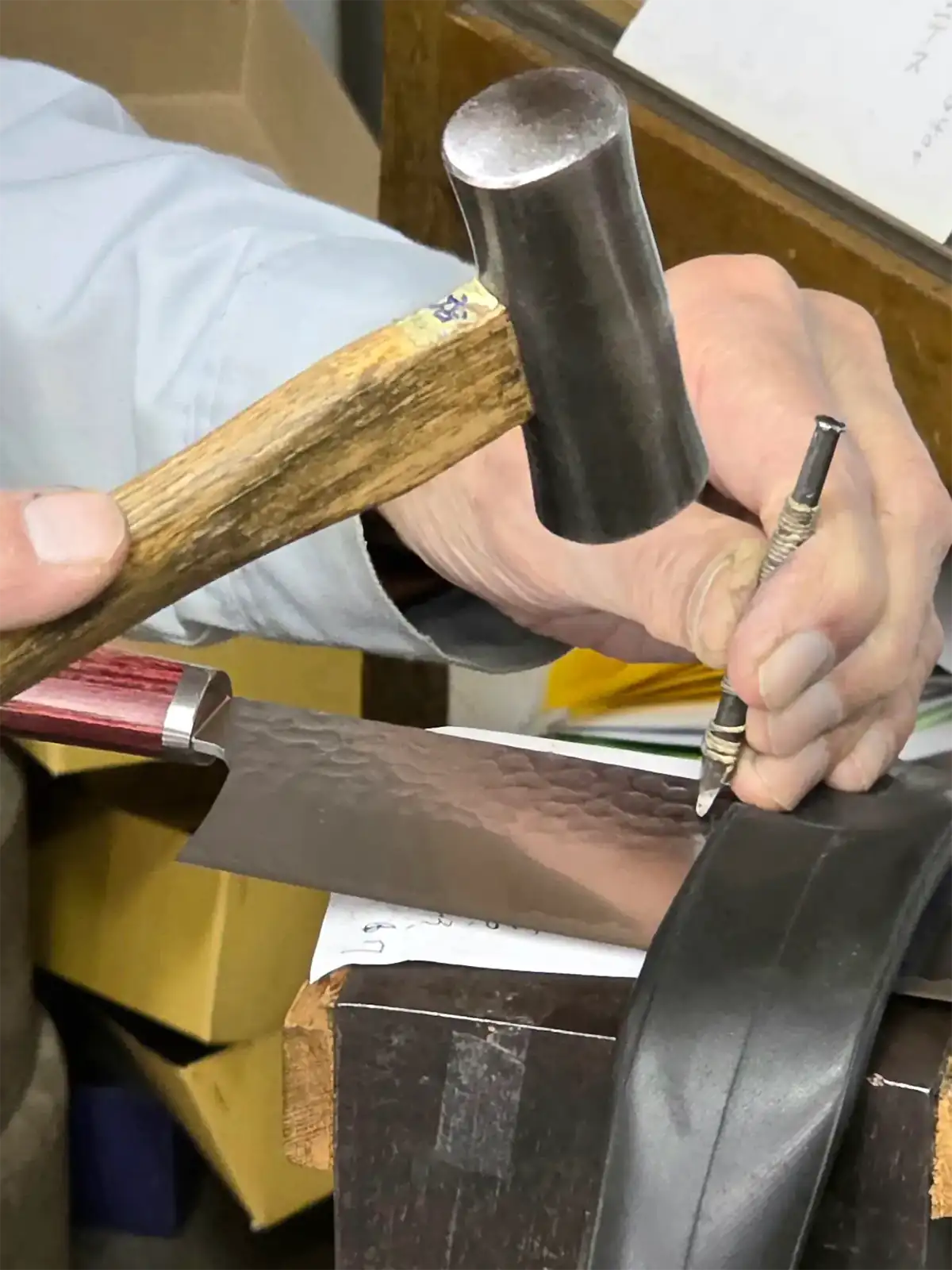
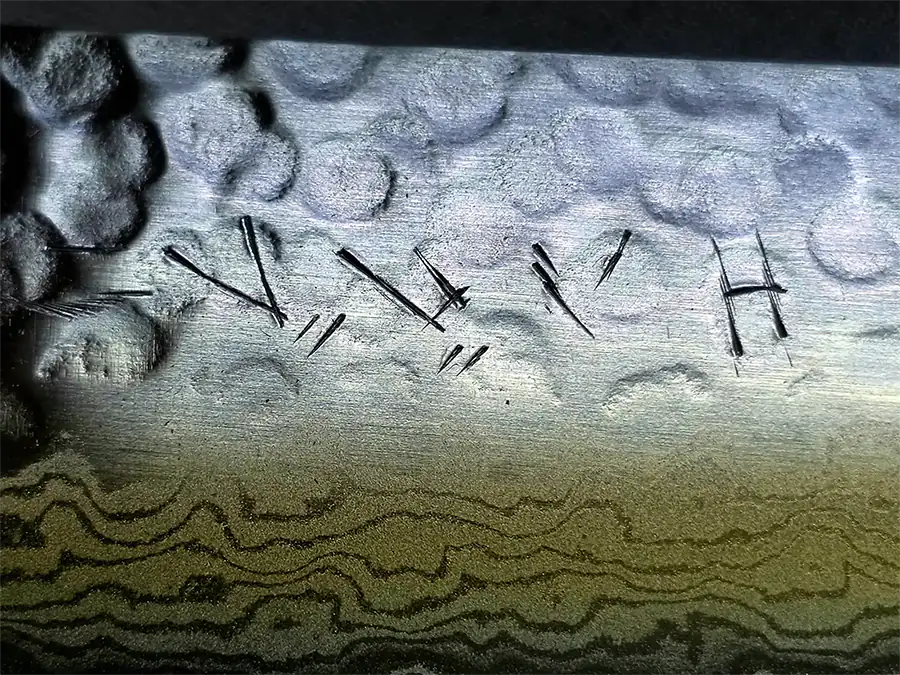
The kind old gentleman, Master Hayakawa Masaya, hand-engraved our family name onto two of the knives — using a hammer and punch directly into the hardened steel. The third knife remained unengraved: "Too hard."
The Schafberg Railway on the Wall
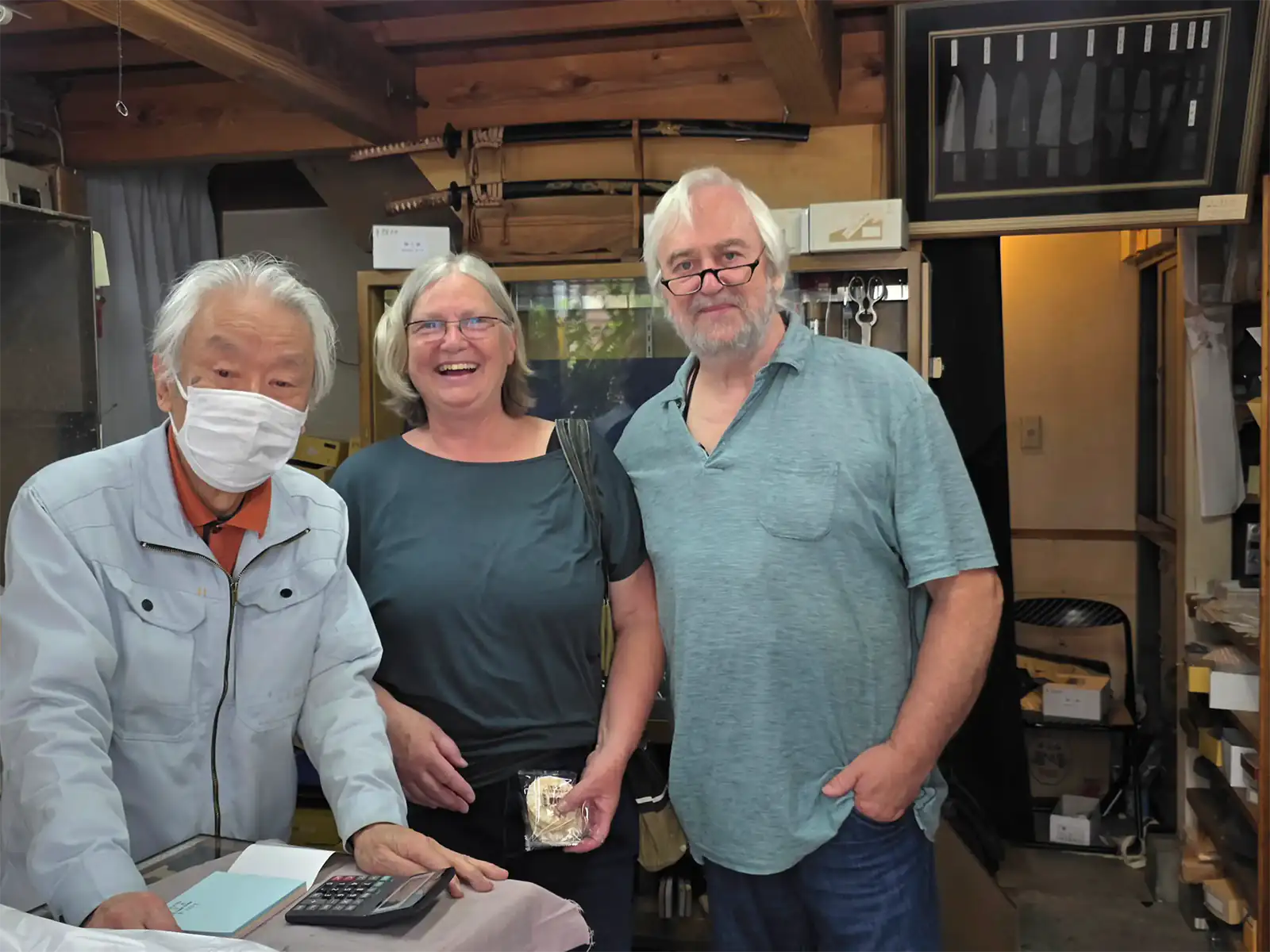
When Barbara brought up a framed photo of an Austrian Schafberg Railway steam locomotive on his wall, Master Hayakawa opened up completely. An instant spark: He gave us two cookies, insisted on taking a photo with us on his smartphone, carefully noted down details, and wrapped our new treasures. Mission accomplished.
A Shop Borrowed in Time
On the queue ticket we received in the shop, a note stated: "It will close in June 2027." That is precisely why this story represents more to us than just three beautiful knives; it represents an encounter that may soon no longer be possible.
Why the Knife Set is Listed in Our Japan Budget
Among camper van rental, expressway tolls, and onsens, this item stands out: The three-piece knife set was no casual souvenir, but a deliberate keepsake from our trip. That's why it appears separately in our financial summary — rather than hidden under "Miscellaneous".
Full Japan Cost Breakdown
Rentals, tolls, hotels, onsens, and the special knife set expense — transparently itemized for 52 total travel days.
View Cost Overview → Camper LifeSix Documented Campsites
Selected Michi-no-Eki stations and overnight stops with coordinates, amenities, and original photos.
Discover Campsites →The Kyoto Stage in Our Complete Travel Log
The story of the knife shop was just one single moment during our 47 days in Japan. Interactive maps, daily stages, further Kyoto experiences, and all ~40 documented stops can be found in our public Polarsteps travel log.
View Journey on Polarsteps ↗