How Much Time Does a Japan Campervan Road Trip Really Need?
Japan by Campervan: Three Weeks or Six Weeks?
Determining how many days are sensible for a Japan campervan trip depends primary on your route: Three weeks are enough for a great trip to Japan – or for a regionally focused campervan route. The key factor is deciding what you want to squeeze into your itinerary during that time.
Tokyo, Kyoto, Hiroshima, and other major stops can easily be combined in 14 to 21 days – especially when traveling by Shinkansen bullet train. Traveling in a campervan, however, inevitably offers a completely different way to experience Japan.
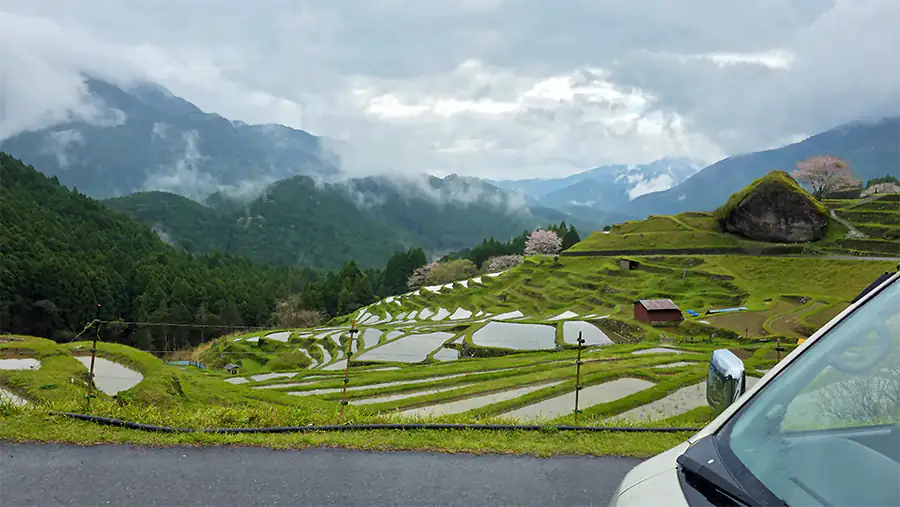
That's because a campervan brings more than just mobility. It takes you where the Shinkansen doesn't go: along scenic backroads, through mountain passes and small towns, along coastal roads, and to overnight spots far off the beaten track.
The more of these experiences you want to include, the more valuable additional time becomes.
Japan Campervan Route: Trip Duration and Travel Style
| Trip Concept | Timeframe | What Is Possible |
|---|---|---|
| Tokyo, Kyoto, Hiroshima, and major cities | 14–21 days | Connect major destinations using the Shinkansen and focus on selected highlights. |
| A regional campervan route | 14–21 days | Explore specific areas such as Mount Fuji, the Japanese Alps, or Nikko via backroads with occasional side trips. |
| Multi-region Japan campervan route | 4–6 weeks | Link cities, landscapes, coasts, and mountain regions, experiencing much more of the journey between major stops. |
| An extensive campervan trip through Japan | 6–8 weeks | Thoroughly explore multiple regions, include secondary routes and side trips, with the freedom to linger whenever you find something fascinating. |
The difference between a classic train/hotel trip and a campervan road trip isn't just about driving—it also changes the budget logic: While typical travel cost estimates for hotels and Shinkansen tickets usually calculate around €110–€160 per day per person, combining a campervan, free Michi-no-Eki overnight spots, and selected fixed accommodations (from guesthouses and business hotels to temple stays) allows even long journeys for under €85 a day – including flights, vehicle rental, fuel, and tolls. To our detailed cost overview →
This isn't a critique of shorter trips. Three weeks in Japan can make for an incredible journey. With less time, you simply need to make clearer choices about which parts of Japan to include – and whether the Shinkansen or a campervan better matches your ideal pace.
Our 47-Day Experience
For us, renting a campervan was the right choice because the journey itself became a central part of the experience. Our 47 days aren't meant as a rigid blueprint for the ultimate Japan route, but rather as our personal experience of a comprehensive Japan campervan round trip.
On Polarsteps, you can view our entire route with every stop and detour. That way, you can easily decide which parts best suit your own travel plans.
Driving Times on a Japan Road Trip: Maps Can Be Deceiving
The classic Tokyo–Kyoto–Hiroshima route and back to Tokyo totals roughly 1,500 to 1,600 kilometers, depending on the exact path. For comparison: Driving from Lübeck to Munich and back in Germany is about 1,500 kilometers. On German Autobahns, such distances can be covered relatively quickly. In Japan, driving a campervan presents a very different reality: total mileage isn't the only metric—road type, traffic, and topography are key.
Expressways offer fast travel, but require toll payments: In a campervan, expect average speeds around 70 to 80 km/h there. Off the expressways, the most scenic routes pass through villages, across mountain passes, and along coastal roads – on these secondary roads, our average speed dropped to 35 to 45 km/h. Covering 100 kilometers takes roughly 1¼ to 1½ hours on the expressway, or about 2¼ to nearly 3 hours on rural backroads.
- Backroads add time: Expect roughly one to nearly two additional hours for every 100 kilometers traveled.
- Driving time is only part of the equation: A distance of 1,600 kilometers quickly translates into many hours behind the wheel. Rest breaks, grocery runs, sightseeing, and spontaneous stops add up on top of that.
- The journey is part of the destination: Traveling in a campervan means you're not just hopping between famous sights, but actively experiencing everything that lies in between.
That was precisely the appeal of a campervan road trip for us: The drive itself was meant to be much more than just a link between two tourist destinations.
What Additional Time Unlocks
A two- or three-week trip to Japan is very doable. A realistic itinerary within that timeframe focuses on one or two key regions. Trying to connect multiple distant regions in a campervan while trying to absorb the scenery along the way would be unrealistic.
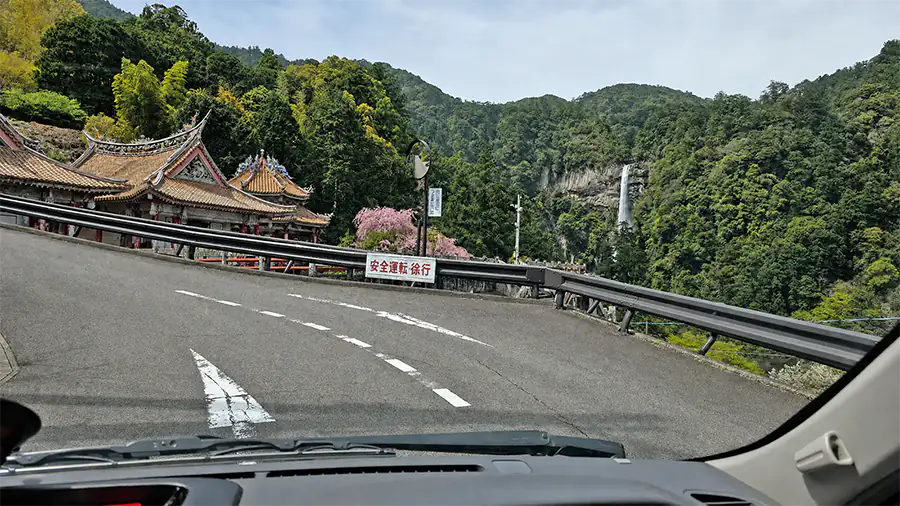
Having more time lets you explore several distinct regions at a comfortable pace and discover Japan beyond the standard tourist trail. Scenic secondary roads, spontaneous detours, and the landscapes nestled between major highlights find a natural place on your itinerary.